Junagarh Fort Bikaner: History, Timings, Entry Fee & Palace Guide

Rann Utsav: Dates, Timings, Activities, and Everything You Need to Know About the White Rann of Kutch Festival
December 9, 2025
Best Rajasthan Tour Packages from Delhi | Prices, Itineraries and Deals
December 22, 2025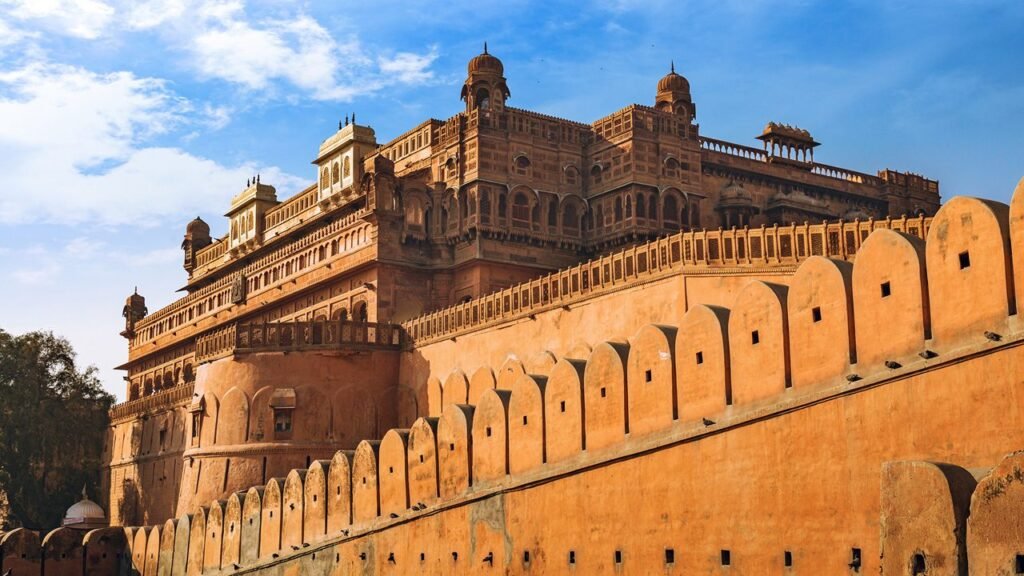
Introduction: Junagarh Fort, Bikaner at a Glance
Junagarh Fort is one of the most prominent historical landmarks in Rajasthan and a defining symbol of Junagarh Bikaner’s royal past. Unlike many hilltop forts in the state, this Bikaner Fort stands on the plains and reflects a unique blend of strength, planning, and refined architecture. Built in the late 16th century, Junagarh Fort has remained largely unconquered, adding to its historical importance. The fort complex includes grand palaces, courtyards, and museums that showcase the legacy of Bikaner’s rulers. Today, Junagarh Fort continues to be a major attraction for visitors who want to understand the region’s history, architecture, and cultural heritage in one well-preserved site.
Where Is Junagarh Fort Located in Bikaner?
Junagarh Fort is located right in the heart of Junagarh Bikaner, making it one of the most accessible heritage sites in the city. Unlike many famous forts that sit on hilltops, this Bikaner Fort was built on flat land, which is rare in Rajasthan. Its central location means you can easily reach Junagarh Bikaner from the railway station, main markets, and residential areas within a short drive or even a walk in some cases.
What truly sets this Bikaner Fort apart is how it dominates the city skyline without relying on height. Instead of natural elevation, Junagarh Bikaner showcases massive walls, strong bastions, and smart planning for defense. This makes the fort not just easy to visit but also fascinating from an architectural and historical point of view, especially for travelers exploring Bikaner city.
History of Junagarh Fort: From Foundation to Legacy
The history of Junagarh Fort begins in the late 16th century when it was commissioned by Raja Rai Singh, one of the most prominent rulers of Bikaner. The construction of the fort started in 1589 and was completed in 1594, marking a turning point in the history of Junagarh Fort as the new seat of power for the region. Before this, the rulers lived in a smaller fort known as Junagarh, which later gave the new fort its name.
As the history of Junagarh Fort progressed, successive rulers of Bikaner expanded and strengthened the complex by adding palaces, temples, and courtyards. Each addition reflects the period in which it was built, creating a layered record of royal life and governance. One of the most notable aspects in the history of Junagarh Fort is that it was never conquered, despite facing several attacks. This long-standing resilience has secured its place as one of the most historically significant forts in Rajasthan.
Architectural Highlights of Junagarh Fort
The architecture of Junagarh Fort reflects a refined balance between strength and elegance, shaped by centuries of royal influence. Built primarily using red sandstone and marble, Junagarh Fort showcases a mix of Rajput, Mughal, and Gujarati styles that feel cohesive rather than decorative for show. Within the complex, Junagarh Palace Bikaner stands out for its detailed stone carvings, painted ceilings, and thoughtfully designed courtyards that allow light and airflow in the harsh desert climate.
What makes Junagarh Fort especially interesting is how its architecture evolved over time. Different rulers added their own touches, resulting in palaces and halls that feel distinct yet connected. The artistic detailing you see here often appeals to travelers exploring heritage routes such as the Golden Triangle Tour with Ranthambore or those extending their journey through an Agra Tour Package. As part of a broader Rajasthan Tour Package, Junagarh Palace Bikaner offers a clear look into how royal architecture adapted to both power and practicality over generations.
Inside Junagarh Palace Bikaner: What to See
Inside Junagarh Palace Bikaner, visitors step into a well-preserved royal complex that reflects the lifestyle, traditions, and governance of Bikaner’s rulers. The palace is not a single structure but a series of interconnected buildings, courtyards, and halls, each serving a distinct purpose during different periods.
Key areas within Junagarh Palace Bikaner include grand audience halls where royal ceremonies once took place, private chambers designed for comfort in extreme weather, and richly decorated rooms that highlight traditional art and craftsmanship. The complex also houses museums displaying royal artifacts, weapons, textiles, and photographs, giving visitors a clear understanding of everyday life inside the palace. Overall, Junagarh Palace Bikaner offers an immersive experience that feels structured, informative, and easy to explore without being overwhelming.
Junagarh Fort Bikaner Timings: Visiting Hours Explained
The Junagarh Fort Bikaner timings are straightforward and visitor friendly, making it easy to plan your visit without rushing. As per the standard schedule, Junagarh Fort is generally open from 10:00 AM to 4:30 PM on all days of the week. The last entry is usually allowed around 4:00 PM, giving visitors enough time to explore the fort and palace complex properly.
When checking Junagarh Fort Bikaner timing, it’s good to know that the schedule usually remains the same throughout the year, with no major seasonal changes. However, timings may vary slightly on public holidays or during special events. To make the most of your visit, arriving earlier in the day is recommended, especially during peak tourist months when Junagarh Fort Bikaner timings tend to draw larger crowds.
Junagarh Fort Entry Fee and Ticket Information
The junagarh fort entry fee varies depending on your category and what you want to see. Indian adults typically pay a lower ticket price, while foreign tourists pay a higher rate. Children and students often receive discounted entry, but you may need to show valid ID or student cards. In many cases, photography or video cameras require an additional camera fee at the ticket counter, so be ready for that if you plan to take pictures inside the fort complex.
Ticket pricing for Junagarh Fort is straightforward and clearly displayed at the entrance, helping visitors avoid confusion. If you’re combining this with broader travel plans, the Golden Triangle Tour Package is a popular choice that covers major landmarks across North India. Another option is the Golden Triangle Tour With Ranthambore, which adds wildlife to your itinerary. For those extending further east, the Golden Triangle Tour with Varanasi blends heritage city visits with spiritual experiences.
Always check the latest fees at the ticket counter or official site before you go. Prices can change seasonally or with special events, but being informed about the junagarh fort entry fee ensures you’re prepared and won’t face surprises at the gate.
Best Time to Visit Junagarh Fort Bikaner
The best time to visit Junagarh Fort is during the cooler months, from October to March, when the weather in Bikaner is pleasant and comfortable for walking around the fort complex. During this period, daytime temperatures remain manageable, making it easier to explore this historic Bikaner Fort without feeling rushed or exhausted by the heat.
If you’re planning your visit during the day, the morning hours between 10:00 AM and noon are ideal for Junagarh Fort. The light is good for photography, and the crowds are usually thinner. Summers in Bikaner, especially from April to June, can be extremely hot, which may limit how much time you can spend inside the fort. Visiting Junagarh Fort in winter not only improves comfort but also allows you to fully appreciate its architecture, courtyards, and palace interiors at a relaxed pace.
Travel Tips for Visiting Junagarh Fort
When planning a visit to Junagarh Fort, wear comfortable footwear, as the fort complex is large and involves a fair amount of walking across stone floors and courtyards. Exploring Junagarh Bikaner properly usually takes 1.5 to 2 hours, so plan your schedule accordingly rather than trying to squeeze it in between other stops.
Photography is allowed in most areas of Junagarh Fort, but some sections inside museums or palace rooms may have restrictions, and a camera fee may apply. Always follow posted signs and staff instructions. Since Junagarh Bikaner is centrally located, you can easily combine your visit with nearby attractions such as local markets or temples on the same day. Keeping your visit relaxed and unhurried will help you enjoy the fort’s details without missing key areas.
Why Junagarh Fort Is a Must-Visit Bikaner Fort
Junagarh Fort stands out as a must-visit Bikaner Fort because it combines strong historical significance with refined architecture in a way few forts do. Unlike many hilltop structures, Junagarh Fort was built on the plains, relying on massive walls, strategic planning, and solid construction rather than natural height. This alone makes it unique among every major Bikaner Fort and adds to its historical importance.
From a historical perspective, Junagarh Fort remained unconquered and continued to evolve under successive rulers, leaving behind a rich architectural record within its walls. Grand palaces, detailed interiors, and well-planned courtyards reflect both power and practicality. For anyone exploring a Bikaner Fort that offers depth, clarity, and authenticity, Junagarh Fort delivers a complete experience that explains why it remains one of Rajasthan’s most respected heritage sites.