
City Palace Jaipur: History, Timings, Entry Details, Interiors and Complete Visitor Guide

Tourist Places in Delhi: A Complete Guide to the Best Places to Visit in Delhi NCR
November 13, 2025
Golden Triangle Tour of India: A Complete Guide to India’s Most Iconic Travel Circuit
November 25, 2025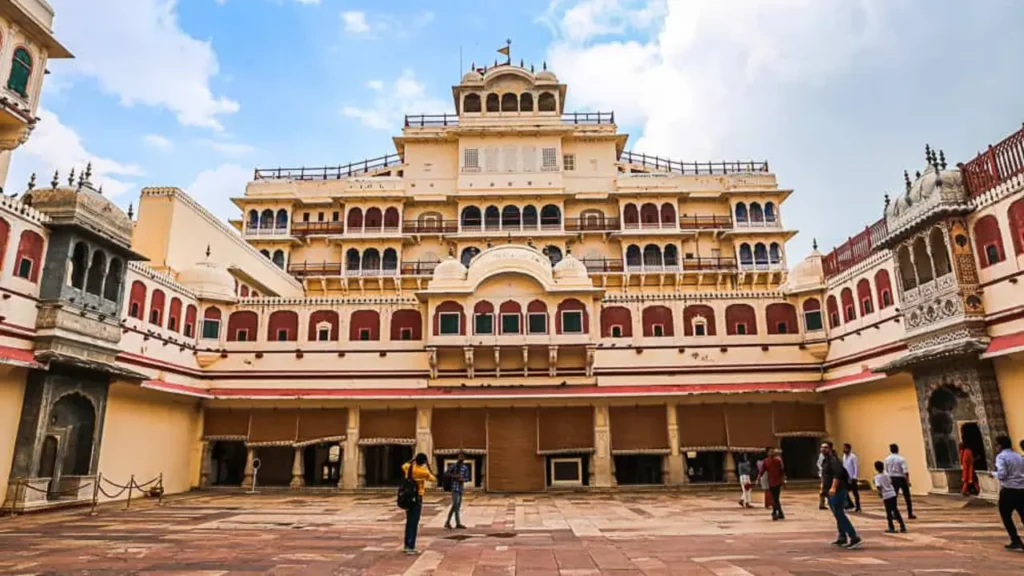
Located in the heart of the Pink City, city palace jaipur stands as one of the most important historical landmarks for anyone visiting Jaipur for the first time. The palace is known for its mix of Rajput strength and Mughal elegance, a blend you can see clearly in its courtyards, gateways, and detailed artwork. It has been the center of royal administration, ceremonies, and daily life for generations, which is why it still holds such a strong place in Jaipur’s heritage.
For first-time visitors, understanding what makes this palace special makes the experience much better. In this guide, you’ll find everything you need to explore it confidently, including its history, the museum inside the complex, the architecture and interiors, the practical timings, and even details about who lives here today. This sets the foundation for a deeper look at a place that still represents the living legacy of Jaipur’s royal family.
History of City Palace Jaipur (Well-Structured Pointers)
The city palace jaipur history starts in 1727 when Maharaja Sawai Jai Singh II built the palace as part of the foundation of Jaipur.
The purpose behind the complex was dual: it served as the administrative centre of the new capital and the royal family’s main residence, a theme repeated throughout the city palace jaipur history.
Early construction used red sandstone for durability and marble for the main chambers. Fresco work, jaali screens and carved pillars became defining elements of the city palace jaipur history.
Major architectural additions evolved over different centuries:
Chandra Mahal (royal residence and the oldest surviving part)
Mubarak Mahal (reception and textile display)
Sabha Niwas (royal audience hall)
Pritam Niwas Chowk (the four iconic gates)
These layers help explain why the city palace jaipur history feels like a timeline rather than a single building phase.
Artisans from Jaipur shaped the stonework and frescoes, Mughal court craftsmen influenced symmetry and motifs, and Bengal artists contributed decorative styles, all blending into the broader city palace jaipur history.
Visitors who follow routes like the Golden Triangle Tour With Ranthambore or the Golden Triangle Tour with Varanasi often appreciate how the palace anchors the early cultural development of Jaipur.
Who Lives in the City Palace Today
Many travelers want to know who lives in city palace jaipur, and the answer is simple: the Jaipur royal family still resides inside the complex.
Their primary residence is the Chandra Mahal City Palace Jaipur, which is the oldest and most private part of the palace.
Only the ground floor of Chandra Mahal is open to tourists, while the upper floors remain off-limits because they are still used by the family.
The current city palace jaipur owner is the royal family trust, which manages the palace, its museums and the heritage conservation work.
Several traditional ceremonies, including festivals, private rituals and official events, continue to take place inside the palace, adding to the sense that it remains a living royal residence even today.
Visitors who enjoy cultural experiences like the Ganga Aarti in Varanasi or the Ganga Aarti in Rishikesh often find this living heritage especially interesting because the palace is not just a monument but an active part of Jaipur’s royal traditions.
Exploring the City Palace Museum Jaipur
The city palace museum jaipur is one of the highlights of the entire complex because it offers a close look at the lifestyle, artistry and daily traditions of the Jaipur royal family. The Textile Gallery showcases robes, turbans, royal outfits and finely woven fabrics that were once worn for court ceremonies, festivals and important meetings. The Arms Gallery displays swords, spears, shields and even handwritten manuscripts that explain how these weapons were used. The Art Gallery features miniature paintings, royal portraits and delicate artworks that show the evolution of Jaipur’s artistic style over centuries. What makes the city palace museum jaipur different from typical museums is that everything here is directly tied to the family that still lives inside the palace, so the items feel personal rather than distant or decorative. Travelers often love how well-preserved the pieces are and how each gallery gives a real sense of how the royals dressed, fought, ruled and celebrated.
What’s Inside City Palace Jaipur
Mubarak Mahal
- The first major spot you encounter when exploring the city palace jaipur inside areas.
- Known for its airy architecture and elegant white façade.
- Houses museum displays featuring royal costumes, textiles and ceremonial outfits.
Pritam Niwas Chowk
- One of the most iconic courtyards inside the complex.
- Features the four famous seasonal gates representing spring, summer, monsoon and winter.
- The Peacock Gate, with its detailed artwork and bright blues, is the most photographed spot and a major highlight of the city palace jaipur interior.
Sabha Niwas (Royal Audience Hall)
- Historically used for royal meetings and state ceremonies.
- Filled with chandeliers, antique furniture and old paintings that add richness to the city palace jaipur interior.
- Offers a strong sense of how rulers once conducted official affairs.
Chandra Mahal (Partial Entry)
- The oldest and most private part of the palace, still partly used by the royal family.
- Only the ground floor is open to visitors, but even this glimpse shows the lavish and detailed style of the city palace jaipur interior.
- Upper floors remain closed because they serve as private royal residences.
If you want the next section structured the same way, just tell me which one to write.
6. City Palace Jaipur Timings and Tickets
(Structured, clear, and keyword-rich)
City Palace Jaipur Timings
- The official city palace jaipur opening time is 9:00 AM.
- The official city palace jaipur closing time is 5:00 PM for day visits.
- Night tourism hours (when available): 7:00 PM to 10:00 PM for selected museum areas and courtyard viewing.
- Many people search for city palace jaipur timing before planning their day, and these fixed hours help visitors arrange their schedule smoothly.
Ticket Prices
- General Entry: Approx. ₹200–₹300 for Indian visitors and ₹700–₹1,000 for foreign visitors.
- Museum Entry: Approx. ₹300–₹500 for Indian visitors and ₹1,000–₹1,500 for foreign visitors.
- Chandra Mahal Premium Entry: Usually priced higher (₹2,000+), as it includes access to the exclusive ground floor of Chandra Mahal.
Best Time to Visit
- Mornings between 9:00 AM and 11:00 AM for cooler weather and softer lighting for photography.
- Late afternoon also works, but crowds peak around mid-day.
How Long Does It Take?
- A quick walk-through: 1 hour.
- Full museum + courtyards + photography time: 2 to 2.5 hours.
Helpful for Travelers
People planning broader routes such as the Golden Triangle Tour with Ranthambore appreciate knowing these details early. Those comparing heritage sites as part of an Agra Tour Package or a larger Rajasthan Tour Package also rely on accurate city palace jaipur timings to map their day efficiently.
About City Palace Jaipur (Summary Section)
Architecture
- When people look for about city palace jaipur, the first thing they should know is that the architecture blends Rajput strength with Mughal elegance.
- Red sandstone, marble, fresco work and carved gateways define the structure.
Museum
- A key part of any summary about city palace jaipur is its museum, which displays textiles, royal outfits, weapons, manuscripts and miniature paintings.
Royal Family Residence
- Another essential detail about city palace jaipur is that the Jaipur royal family still lives here.
- Their residence is inside Chandra Mahal, with only the ground floor open to visitors.
Visitor Experience
- Anyone wanting a quick idea about city palace jaipur should know that visitors can explore courtyards, seasonal gates, audience halls, galleries and iconic interiors.
- Photography, culture, and history blend naturally throughout the complex.
Why It’s a Must-Visit
- The most important thing about city palace jaipur is that it’s not just a monument; it’s a living palace with active traditions, rich collections and stunning design.
- This makes it one of Jaipur’s most meaningful and memorable attractions.
Conclusion
A visit to city palace jaipur gives you a complete picture of Jaipur’s royal heritage, from the living quarters of the royal family to the museum collections that showcase centuries of art, textiles and weapons. The palace interiors, courtyards and seasonal gates offer a blend of culture and architecture that you won’t find anywhere else in the city. Exploring the museum, stepping into historic halls and seeing how tradition still continues inside the complex makes the visit worth your time. To enjoy the experience fully, plan to arrive early, when the palace is quieter and the lighting is perfect for taking in all the details without the crowds.